

Neck repair is a surgical procedure used to improve the signs of aging in the neck skin. This procedure can tighten sagging neck skin, remove deep wrinkles, lines and creases, eliminate fatty deposits along the jawline (jowls), and also firm the neck area. The neck will appear younger, firmer and smoother.

While loose skin can be tightened by a neck repair the texture of the skin will not be changed. If you have sun damage, wrinkles around the mouth, irregularities in skin colour, acne scars, and/or age spots, you may want to also consider skin-resurfacing procedures in combination to improve the skin. The following conditions could indicate that neck surgery is right for you:
- Neck skin is loose and sagging
- Jowls or loss of a well-defined jawline
- Loose skin, wrinkles, or Vertical bands of skin in your neck
- Excess fat in the neck.
This can be done in combination with other facial cosmetic procedures, such as a brow lift or eyelid surgery to give a more balanced, natural rejuvenation.
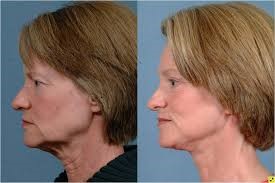
There is information below on the different technical options for neck repair – these will all be discussed with you in your consultation.
Click here to book your consultation.
Neck Repair Options
Depending on your individual goals and needs the neck repair procedure varies quite a bit. Today, many different techniques exist with outcomes that are consistently reliable and durable.
Posterior Neck Repair
This procedure can be performed as an outpatient with oral sedation, alternatively it can also be performed at a day clinic under conscious sedation or full general anesthetic. A posterior neck repair usually involves Dr Schroder making an excision behind your neck extending from under your hairline to your upper back and the excess skin will be trimmed away creating a more youthful and natural appearance.
Anterior Next Repair
An anterior neck repair is referred to as a traditional neck repair.
Traditional Neck Repair
As this procedure is more complicated Dr Schroder will require you to be kept overnight to ensure the best possible outcome. A traditional neck repair procedure usually involves the surgeon making an incision in your hairline starting at your temples, continuing down and around the front of your ears and ending behind your ears and may extend in your scalp. An incision might be made under your chin to improve the appearance of your neck. The excess skin will be trimmed away creating a more youthful and natural appearance.
Schedule a consult with Dr Schroder today to find out which option would be right for you.
What to expect
Depending on the complexity of the procedure can last 1-4 hours. After a neck repair, your head will be wrapped loosely in bandages that provide gentle pressure to minimize swelling and bruising. Following surgery, a small, thin tube may be temporarily placed under the skin behind your ear to drain any excess blood or fluid that may collect. Any bandages and drain tubes will usually be removed in one or two days, and most stitches are removed during visits within within a week of the surgery. Once the dressings and drains are removed, puffiness and discoloration may be more pronounced in some portions of the face than others. Any unevenness or temporary asymmetry caused by this variance in swelling and bruising-it is normal. A majority of swelling usually occurs in the first 24 to 48 hours – keeping your head elevated during rest is extremely helpful in reducing the initial post-operative swelling. You can expect the majority of the bruising and swelling to subside after about two weeks. You may also experience numbness to the face, which usually resolves itself within several months. Medication will be prescribed to help control the pain as needed.
Avoid straining, bending, and lifting during the early post-operative period to reduce excessive pressure or motion. This includes heavy work, aerobics, running or weight lifting, and sex for at least 2-3 weeks. Walking and mild stretching are fine. Additionally, do not wear clothing that needs to be placed over your head. Generally, scars from the incisions are hidden within your hair and in concealed skin creases. Scars will remain pink for a few months and will fade over the next 6 months. Concealing makeup is usually permitted after the first week. Since the healing process is gradual, you should expect to wait at least several months to realize the full benefits of the neck repair.
NECK REPAIR RISKS:
Each year thousands of women undergo successful neck repair procedures, experience no major problems and are happy with the results. Significant complications from a neck repair surgery are infrequent. However, make sure you understand what surgery involves, including possible risks, complications and follow-up care. Neck surgery poses various risks, including:
- Excess scarring.
- Changes in skin sensation in your cheeks, scalp and neck for a few months up to two years.
- Temporary or permanent hair loss near the incision sites.
- An accumulation of blood under the skin (hematoma).
- Facial nerve damage which can result in temporary or permanent numbness and weakness of the facial muscles.
- Skin loss due to an interruption to the blood supply of your facial tissues.
- The need for revision surgery to correct rare complications of the neck surgery
Like any major surgery, a facelift poses a risk of bleeding, infection and an adverse reaction to anaesthesia. It’s also possible to have an allergic reaction to the surgical tape or other materials used during or after the procedure You can help minimize certain risks by following the advice and instructions of your surgeon, both before and after your facelift surgery. If you have any concerns about the risks involved with facelift surgery, please do not hesitate to call us.