

Ear surgery, also known as otoplasty, can improve the shape, position or proportion of the ear. A defect in the ear structure that is present at birth or that becomes apparent with development can be corrected by otoplasty. This procedure can also treat misshapen ears caused by injury.
Otoplasty creates a more natural shape while bringing balance and proportion to the ears and face. Correction of even minor deformities can have profound benefits to appearance and self-esteem. If protruding or disfigured ears bother you or your child, you may consider plastic surgery.
WHAT CAN EAR SURGERY TREAT?
Ear surgery is typically used to treat the following
- Overly large ears – a condition called macrotia
- Protruding ears occurring on one or both sides in varying degrees – not associated with hearing loss
- Adult dissatisfaction with previous ear surgery
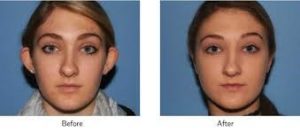
WHO IS A GOOD CANDIDATE FOR EAR SURGERY?
Children who are good candidates for ear surgery are:
- Healthy, without a life-threatening illness or untreated chronic ear infections
- Generally, 5 years old, or when a child’s ear cartilage is stable enough for correction
- Cooperative and follow instructions well
- Able to communicate their feelings and do not voice objections when surgery is discussed
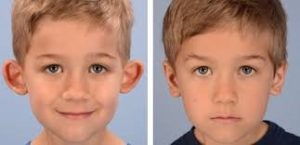
Teenagers and adults who are good candidates for ear surgery are:
- Healthy individuals who do not have a life-threatening illness or medical conditions that can impair healing
- Individuals with a positive outlook and specific goals in mind for ear surgery
- Non smokers
Below are the technical details of the surgery and your options – all of the detail will be covered with you personally in your consultation.
Otoplasty
This is usually performed under general anaesthetic in children and can be done as an outpatient in adults. An incision is made on the posterior aspect of the ear. The cartilage is incised and pinned back using a non-absorbable suture where after the skin is approximated sub- cutaneously with an absorbable suture. The ear is then bandaged for a week post operatively.
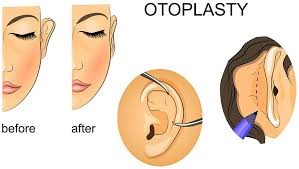
The patient will be required to wear a soft head band for 4 weeks at night. Majority of the bruising will subside within 7 – 10 days. Sport and exercise should be avoided for 4 – 6 weeks.
SURGICAL RISKS
Each year thousands of children, women and men undergo successful otoplasty procedures, experience no major problems and are happy with the results. Significant complications from a otoplasty surgery are infrequent. However, make sure you understand what surgery involves, including possible risks, complications and follow-up care. Otoplasty surgery poses various risks, including: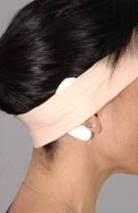
- Excess scarring.
- Changes in skin sensation in your ears for a few months up to one year.
- Bruising
- An accumulation of blood under the skin (hematoma).
- The need for revision surgery to correct rare complications of the otoplasty surgery
Like any major surgery, an otoplasty poses a risk of bleeding, infection and an adverse reaction to anaesthesia. It’s also possible to have an allergic reaction to the surgical tape or other materials used during or after the procedure You can help minimize certain risks by following the advice and instructions of Dr Schroder, both before and after your surgery. If you have any concerns about the risks involved with surgery, please discuss with him.